Signage And Distance
Look, WiFi.
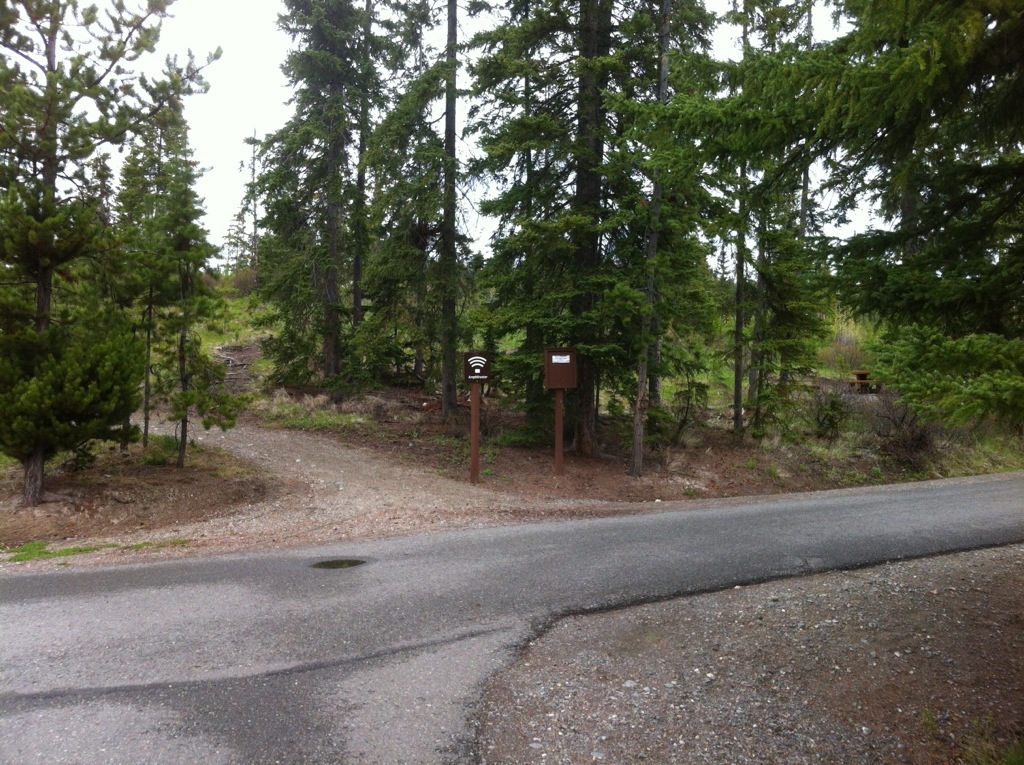
Not so fast.
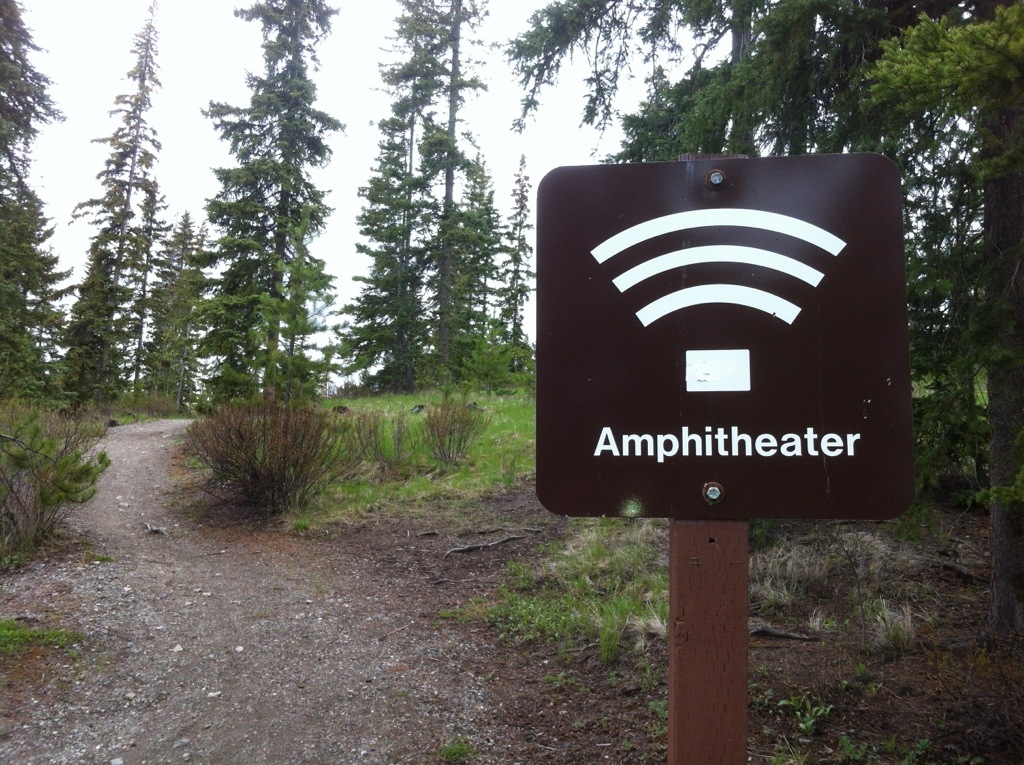
Better than WiFi.
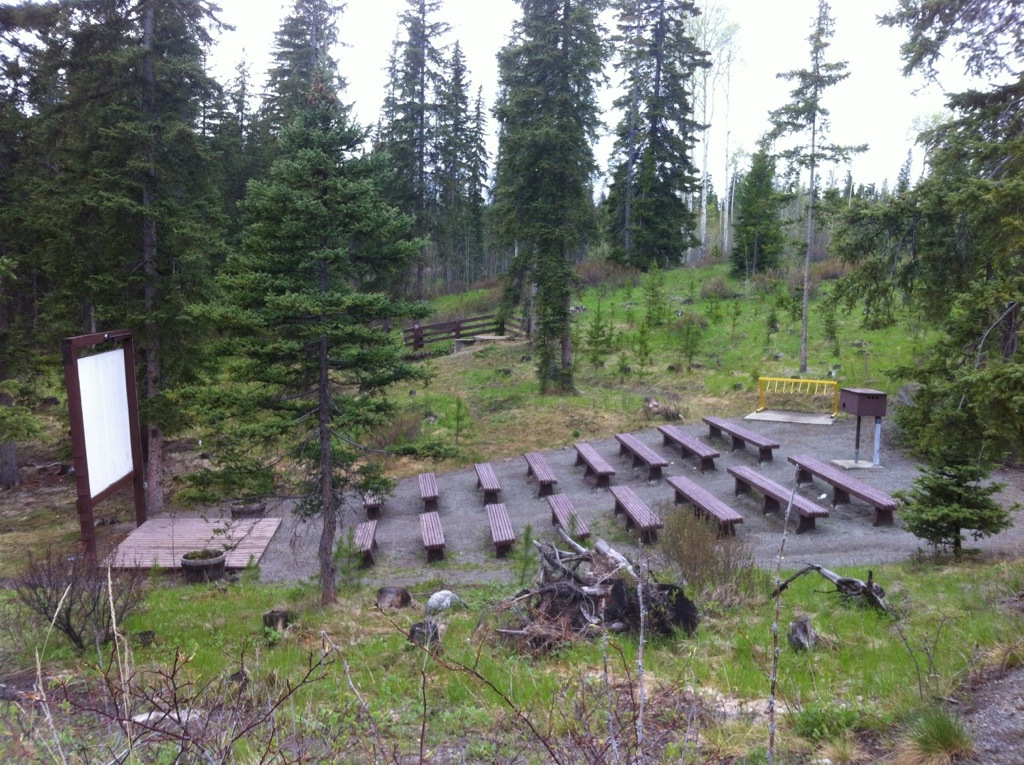
I like the sign, actually. Nice execution of economy.
…or things I might have wondered aloud.
Look, WiFi.
Not so fast.
Better than WiFi.
I like the sign, actually. Nice execution of economy.
Proofs of concept. Fart jokes. Things that look like other things. These were our competing interests…
When I try to do something cool and fresh (fresh to me) with the youngsters, it fails I’d say about 80% of the time. A frustrating number to be sure, but then you get a reminder that that means you succeed 20% of the time. This evening’s small scale aviatorial dream was one of the 20%. Some notable failures from the past include the Lego man that walks by himself (lifeless), vinegar powered vehicles (more intricate than I anticipated), harnessing the power of lightening (please), and anything remotely related to aviation*.
Rory recently got a book of paper aeronautical designs, and she wanted to make a plastic bag parachute. But we’re mad scientists. We don’t do tried, tested and true. We do this:
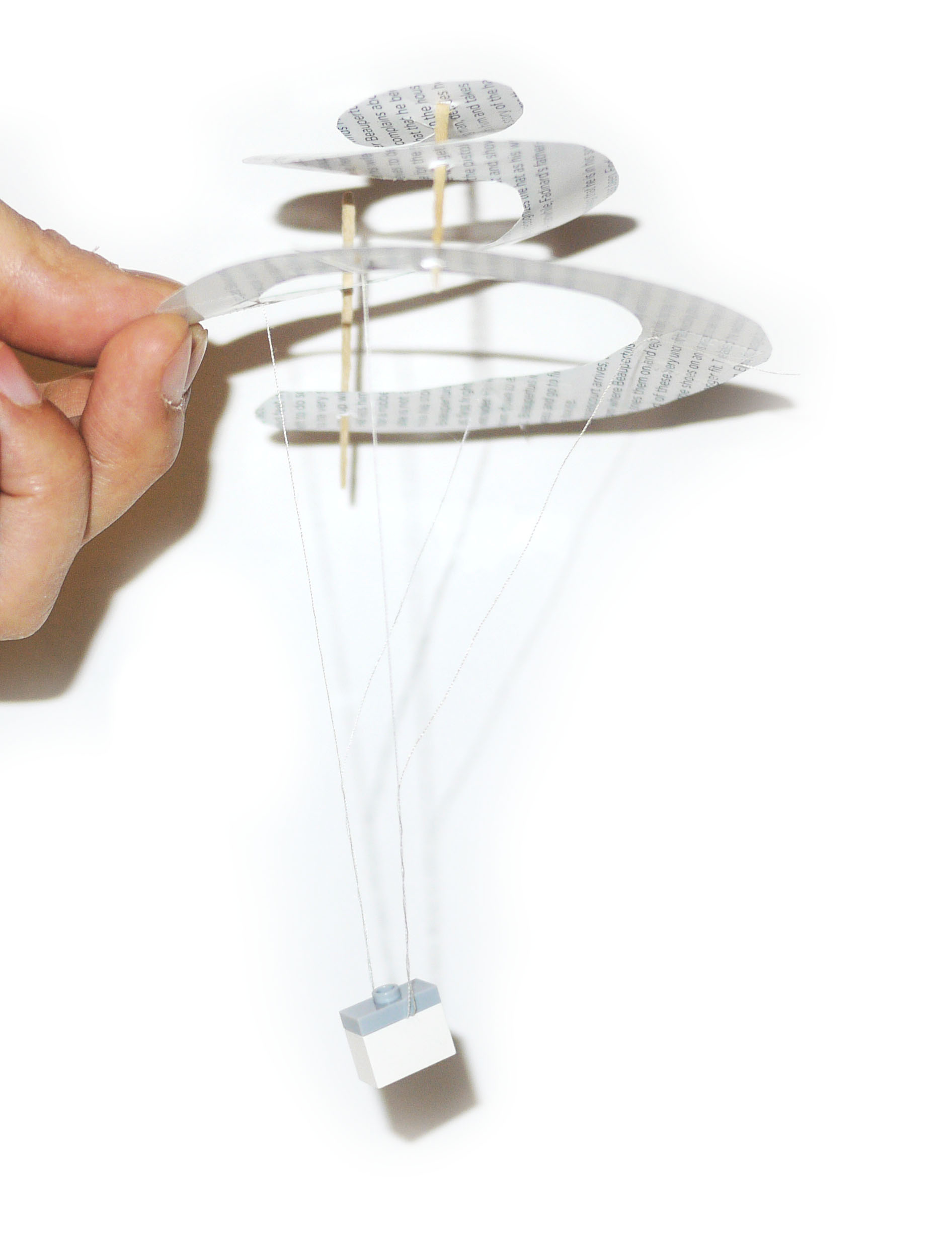
It’s based off a mental image I have of a Leonardo da Vinci drawing. Although I realize now I might be thinking of his helicopter. How accurate my design was, I didn’t care at that point. Because it actually worked!
The real thing doesn’t even look like it has any right to not fall apart in my hand. Believe me, the photo is too flattering. I am not a delusional man. I was emotionally prepared for the disgrace of failure. But before accepting defeat, you must have persistence. That’s why I love a good rapid prototyping session (it even sounds cool: RAP-ID PRO-TO-TYP-ING). But while I was doing real and important science through iteration, Max preferred to distract us with word games (like calling it a fart-o-type and a para-fart). Rory insisted our creation was a worm and needed to make the thing look more worm like. Efficiency suffered. I just couldn’t keep everyone on the same page.
Worms have eyes I’m told:
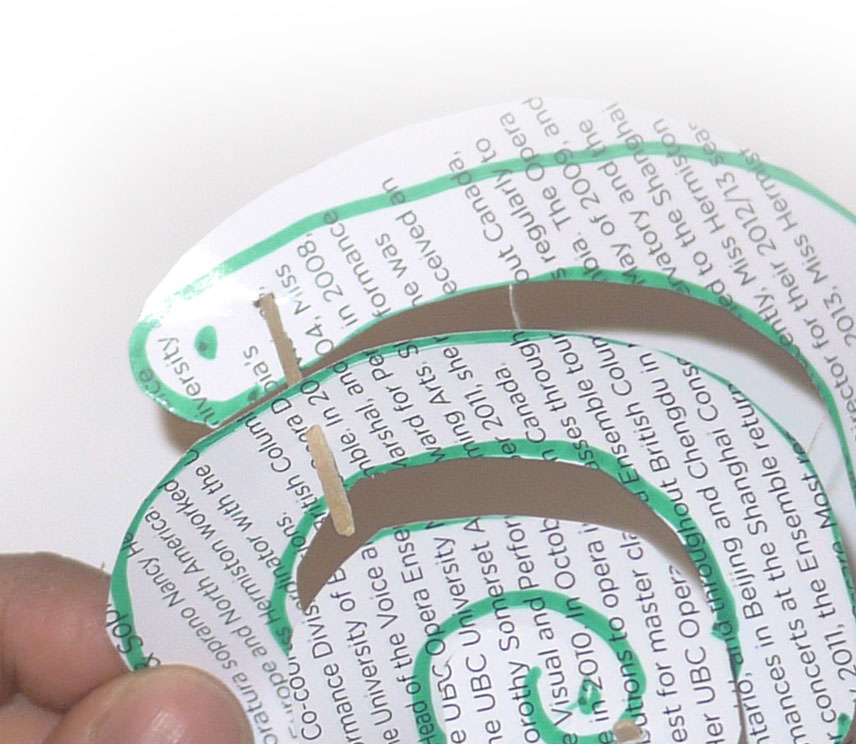
Cool is relative. Of course.
The best laid plans of the children and this man gang aft agley. But not this time! Rory got to enhance the visual design of our craft. Max got to entertain us all with his comedic stylings (as well as gathering raw materials), and we all achieved slowed aerial motion via manipulated air flow. By any measure, the evening was a success and a good time was had by all.
*In spite of that, I believe I am still looked upon as a trick-full magician. But for how long?
Saw Tim’s Vermeer yesterday. SPOILER ALERT! TURN BACK NOW IF YOU HAVEN”T SEEN THE MOVIE BUT ARE PLANNING TO DO SO! If you’ve continued to read, I’ll assume you’ve seen the movie or at least know how Tim Jenison’s machine works. Jenison and Penn Jillette both state that the human acts completely objectively, as if he is a cog in the machine and not the driver. According to them, the human is only there to apply the paint and to process when the mirror’s edge has disappeared. Which sounds like something one could do with software, a camera, and a modified CNC machine. I don’t know if either of them would try to make that claim, but it sounds like a logical question to follow up with. That question being, could we then build a machine that can “look” at a room, any room, and paint a Vermeer?
Also, doesn’t Jenison’s and Jillette’s claim ignore the gorilla in the room distinction between the precision and invariance of inanimate materials versus the imprecision and variance of flesh and the human twitch? Surely the artist lends some character to the painting when using the machine? The film never tries to tackle this question: Is Jenison’s Vermeer effectively indistinguishable from the original? I know that’s not the premiss of the film. But it’s more than a tangential question, isn’t it?
Fin.
